What have you been doing since the age of two? 

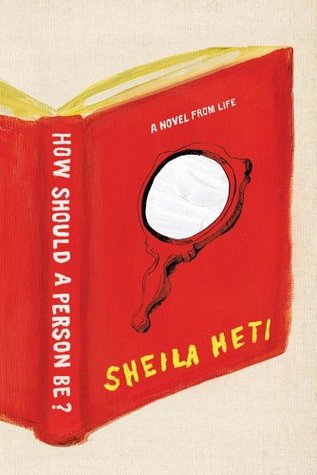
There’s a scene in a book I read recently, How Should A Person Be, where Sheila Heti (a writer who I truly believe has a direct line to my brain) is walking back home with a friend Jen. They have just attended a lecture by an artist who has been painting since he was two and Jen is feeling all torn up. Jen believes that the reason she cannot be successful in life is because she hasn’t been painting since she was two and the only real way to be a genius is to be a prodigy. That to be a genius is to have a long line of events and signs in your life that when altogether traced could only mean one thing, that you are a genius and you’ve always meant to be one. A little bit like this: 

Age 9: you get a guitar. 

Age 15: you play till your fingers bleed. 

Age 24: you are proclaimed a musical genius. 

This type of deterministic and quasi-religious thinking is making Jen feel like the events in her life do not add up to her being a genius. That she hasn’t been painting or singing or writing since she was two. That at best she’s been infinitely curious and at worst a shallow dilettante. And that no matter how hard she works now or in the next five years, no matter how long she slaves at her writing, she can never really be a genius writer because you see she was never really meant to be one. 

Sheila, hearing this comforts her friend saying that everyone has been doing something since they were two and you need to find that and lean into it and use that to inform your work, and that’s what makes a true genius. 

The episode ends in the book, but I imagine hearing that must have given Jen a tiny sliver of hope in her heart. Not at first, not if Jen is a jaded, modern, cynical woman who doesn’t believe that a simple conversation can really change your beliefs or impact your life. But later as she must have been doing her dishes or walking to work, Sheila’s words must have come back to her and lodged themselves between her intense desire to be successful and the terrifying belief that she could never be. And now every time she has a moment to herself, and her thoughts naturally traverse back to the topic of geniuses, she must think: What have I been doing since the age of two?

Sometimes Jen might chance upon something like how she has always created fake intricate conversations in her head, or worked hard to give meaning to mundane, unexciting things of life, but she shakes her head because those are not substantial things. Not meaty enough to be the stuff that makes up genius. But I guess no matter what a jaded cynical modern day woman Jen is, she still carries in her the hope that one day, in a glorious eureka moment, she will find the answer to that question. And I really hope she does. 

Standard

Hidden Stories

There’s a story I try to tell often. It’s about the first time I was sexually harassed at the workplace. I was interning for the very first time with a High Court lawyer. He had a tremendous reputation, words like legend, genius, maverick would often be thrown around. It was only much later in life that I understood it was mostly men who are described this way, usually by other men, but back then at 18, I joined his chamber for a month and I found myself in the text book definition of a hostile environment.

There were only men in his chambers. He only ever hired men because he didn’t think women could keep up with his practice. The rigours and the demands of it. His office was a small, cramped, and smoky cavern with thousands of books and documents making up each wall. There was always a musty smell and everyone caried an air of doing Very Important Work. 

The harassment started immediately. On my first day I was given a laptop where Pornhub was bookmarked and the male associates sniggered while I accessed it. I was ‘asked out’ by two seniors in his office on the same day. There was a constant barrage of sexist commentary about what women cannot or should not do. And one time during his regular sermons on why his genius was not appreciated enough by the world, where his office would be packed to the walls with lawyers and juniors sitting on top of each other, rapt with attention, he challenged me to sit on a male colleague’s lap if I wanted to prove that men and women are equal. It was exhausting and uncomfortable and embarrassing and made me extremely conscious in the workplaces, hesitant to make friends, and aloof from male colleagues till today. This is usually where I end the story. Always angry and very annoyed that this ever happened. 

But there’s something I leave out. And that is five months after the internship I reached out to him thanking him for his support and the opportunity to learn from him and how much he had taught me. Today I want to write about why I did that.

It wasn’t as if I didn’t know that sexual harassment was wrong. I literally maintained a document with everything that was happening just so I wouldn’t forget it. And I shared my experiences with supportive friends who all confirmed and comforted me that I had indeed been sexually harassed. And even as I was writing the email, I distinctly remember thinking how it closed all doors for me to ever speak out against the lawyer and his chamber. And yet I did it in some naked and needless attempt to still be in his good books. It was because I had very much brought into his cult of personality. 

As young women trying to make something of themselves, we crave validation. Validation we are good enough, smart enough, that we have what it takes to succeed. It happens at various levels, we seek validation from our batchmates, from our seniors, from our professors and later from our bosses. Very often these dynamics are gendered. Male disapproval hits us harder because many of us our socially engineered to make it hit us harder. It sticks more when we get called names by men. Whether ugly, bitch, easy, slut or in the professional space; bossy, frigid, incompetent.

The flipside is that we also crave men’s good opinion. During my internship, the lawyer took a special interest in me. He assigned me some work that I put a ton of effort in and I heard from someone who heard from someone else that he liked my work. That’s how he operated, in a dense cult of mystery. And then one day I got invited to his den of vice, where behind the thick smoke I saw him—the genius, legend, maverick. For the rest of the internship he ensured that he took time to talk to me every day. We sparred about the state of the world, feminism, the opera. Winning an argument against him was specially thrilling. He told me about new authors and great thinkers (all men), about his various victories against various judges. He invited me to see how highly his clients regarded him. And I guess I fell for it all. Even as I was being sexually harassed I was actively seeking his validation. 

This part of the story still brings me residual shame and so I usually avoid it, sticking to the easier sanitised black and white parts. But the truth is that almost all sexual violence, be by an intimate partner, child sexual abuse, domestic violence happens to people who are more than passive victims. And we all have host of emotions because of the nature of our relationships with our perpetrators, or have hidden parts of the story where we feel actively complicit in the harassment. And I think sanitised stories like mine only make it that much worse for women who believe we weren’t blameless. 

Today I can see a more holistic truth of the events. And that is even as he was actively putting himself in a position of power over me, he operated from a deep sense of insecurity. I hear it now in his deeply caustic remarks about the national law schools he didn’t attend, about big law firms where he felt rejected, about senior Delhi lawyers by whom he was never accepted. But like many men, he sang the song of his own genius so often, that those around him, including me, often got carried away in his narrative. But today it’s clear that even as I was seeking his validation, he was a pathetic dissatisfied lawyer seeking mine. And so even as I am still abundantly angry that any of this ever happened, I’m also just a little bit satisfied. 

Standard

#1 Things to Do on The Weekend: Bird Watching

A reminder for self when your brain convinces you that spending the weekend alternatively drunk and hungover is imperative to experiencing your 20s to the fullest.

Today you went birdwatching and came back feeling more fertile and generative than you have in a long time. It is an excellent endeavor, a long meandering walk, bathed in the right mix of aimlessness and wonder. It allows you to leave that dark recess of your mind and train your senses to your external environment. You followed sounds and patiently stared at thickets until the birds made themselves known to you. You saw birds, in stillness and in motion, sometimes only catching a speck of colour before they disappeared. You observed these birds closely and identified their specialty, a pin tail, a curved neck, a colored feather, a ruffled crown only to misidentify the bird completely. Sometimes you walked on the road, and sometimes balanced yourself on the edge of the raised footpath. You chased butterflies and ran away from dragon flies. You touched plants that reminded you of the touch-me-nots of your childhood, holding your breath in anticipation and when you were disappointed, you let it out into the world, without fear. You squealed in delight when you saw a long-bodied mongoose titter across the road and savored your wonder when you saw you bird gracefully stretch its wings into a yawn. 

It’s important who you go bird watching with. You want someone with a rich inner world and a low threshold for wonder. You want someone who will tell you facts about the animal kingdom and evolutionary science and other interesting things that you never think about. You want someone who will patiently and tenderly show you exactly where to look, above which branch and below which leaf to spot the bird they’ve spotted. And you want someone you can do the same for. You want someone who will laugh at the couples who sit there, as they teeter on the edge of socially acceptable behavior before making a hasty retreat when they hear your footsteps. You want someone who will share a cold drink with you at the end of your visit and make promises to do it all again someday, soon. 

The bird sanctuary isn’t an Instagram approved place. When you have the option between well-manicured parks with pretty ponds and even prettier fountains and government protected bird sanctuaries, unruly and unkempt; choose the latter. Reject the encroaching dominance of totalitarian Instagram aesthetics. Instead laugh at painted signs that tell you to smile because you are in the lap of nature and forbid you from feeding the birds and setting the place on fire, because apparently that happens. Read the names of the birds that someone has so methodically and bureaucratically put up around the park. Then read their names in Latin and in Hindi, because why not. Don’t mind the benches with large and sticky spider webs and even larger spiders. Don’t mind the fact that you can see the grey and dusty buildings hovering above the edge of the greenery and also across the pond. A bird sanctuary can’t fight the capitalist imperative. But you can. 

As a refugee lawyer, a bird sanctuary holds an important message for you. It is one about enduring connections and ancient routes of travel that predate modern nation states and our ideas of which places are cool. (Why else would birds travel to Noida?) It is a place that exists outside the marked territoriality of everything else around you. Away from peculiar human afflictions like passports and visa. Where a migrant or resident status doesn’t have an impact on your belonging. There is a beautiful thought about our shared commonality in all of it, find it. 

And when you come back, make yourself a cup of tea, play some music and pour down all your thoughts on paper so you can revisit it, again and again. 

Standard

Birds and Bees and Other Horror Stories

As a young girl at the ripe old age of nine finishing my first month in an all-girls boarding school tucked in the middle of the Aravalli valley, sex was on my mind. Maybe it was the sweltering heat in the sultry nights that gave rise to deep friendships, forged out of the danger of whispering secrets after lights out. Maybe it was the tossing and turning trying to decide which out of the two bed side partners fate had allotted you, you liked more. Maybe it was thrill of realizing that that the partner you liked more also liked you more. 

I still remember her; she was the most brilliant student of our form. There was nothing she couldn’t do. She was the smartest, fastest, strongest, most creative nine-year-old there ever was and she picked me to be her friend. She was also the daughter of two doctors who had sent her to the school equipped with a big shiny encyclopedia on the human body. 

It was silver in colour with colorful 3-D diagrams that would pop out if you opened the page, and little flaps which you picked up to reveal more information about the endlessly interesting piece of machinery that a human body is. Her head would always be buried in it, and last I heard she became a doctor too. But that night, after we had discussed all our hopes and dreams and deepest darkest secrets, she asked me if I knew how babies were born. I put on my most authoritative and sophisticated face and said yes, babies are born because of kissing. And she giggled and giggled but refused to divulge anything else. I think it took three additional nights of begging on my part before she agreed to tell me and what she told me horrifies me to this day on. 

She said, babies are born when men pee inside women. It was an innocent misreading on her part, but I was shaken to my very core, aghast with the world and my parents and everybody who indulged in this shameful shameful act. She said she couldn’t believe it too at first, but the facts were there plain as day in her book and promised to let me read it. I only fell asleep after we made a pact and swore to each other that we would never do anything like that. We eventually did read the book again and consulted a senior, a ten-year-old who was wise beyond her age, who solemnly shook her head and explained to us what actually happened. But I can assure you, it didn’t do much to calm me down. The biblical apple had been bitten and I was no longer welcome in the garden of innocence. 

Standard